Clothing and Accessories · Travel Laundry Organization
Silk Laundry Bag Care: Understanding Washing and Drying Instructions
A silk laundry bag is a quiet travel essential: lightweight, easy to tuck into a suitcase, and useful for keeping worn clothes apart from clean ones. Because silk is a delicate fiber, however, a little care goes a long way. Learn how to read washing and drying instructions, choose a gentle routine, and help your bag stay ready for the next trip.
Published October 12, 2026
There is a particular satisfaction in unpacking after a trip and finding the suitcase still organized. A laundry bag helps make that small victory possible, keeping worn garments in one place instead of letting them mingle with fresh outfits, toiletries, or the sweater you plan to wear home. In silk, the familiar travel organizer takes on a softer, more refined feel—but it also calls for a more considered approach to cleaning.
Silk laundry bag care is less about complicated rituals than about noticing the details on the care label. A maximum water temperature, a delicate-cycle instruction, or a direction to air dry can all shape the safest way to wash the bag. These phrases may look like minor fine print. In practice, they help reduce avoidable stress on the fabric and its seams, drawstrings, or other components.
Start with the instructions for the particular bag in your hands. Silk products can differ in construction, lining, padding, and finishing, so one bag’s routine should not automatically be applied to another. Some silk laundry bags are listed as suitable for a delicate machine cycle, while specific care guidance may also set a temperature limit and require air drying. When instructions differ, follow the label supplied with your item.
Why silk needs a gentler laundry routine
Silk is a natural protein fiber prized for its smooth feel and graceful drape. That softness is part of its appeal, but it is also a reason to avoid treating a silk bag like a sturdy cotton tote. Rough agitation, high heat, harsh detergents, and friction from heavy items can all put unnecessary strain on delicate fabric. The aim is to clean the bag while keeping handling calm and controlled.
A laundry bag usually does not need washing after every trip. If it has held clean, dry clothing and has no visible marks or lingering odor, airing it out between uses may be enough. More frequent washing can mean more exposure to water and movement than the fabric needs. A sensible schedule depends on how the bag is used, what it has carried, and the maker’s care guidance.
Before washing, empty the bag completely and check every corner for small items. Close drawstrings or secure loose ties in a gentle knot if the design allows, so they are less likely to tangle. If the bag has a cushion pad, inner casing, or other removable piece, consult its specific instructions rather than assuming it can be washed in the same way as the outer shell.
Take a moment to look over seams and closures, too. A small snag or loose thread is easier to notice before the bag goes into water. Avoid pulling at a caught thread; doing so can make a minor issue worse. For a mark, do not immediately reach for bleach or a powerful stain remover. Test any suitable cleaning approach discreetly, and keep the care label’s restrictions in mind.
What “delicate machine cycle” means in practice
When care instructions allow a delicate machine cycle, that does not mean every washer setting is fair game. Delicate programs are generally designed to use gentler movement and, depending on the machine, a slower or more limited spin. The exact settings vary by appliance. Choose the mildest cycle that matches the product’s instructions, and do not use a more forceful setting simply because the bag looks sturdy.
Temperature is an important part of the instruction. One silk laundry bag listing specifies machine washing on a delicate cycle at no more than 30°C. That upper limit should be read as a ceiling, not an invitation to use hotter water. If the label gives a lower temperature or a different direction, follow that instead. Warm or hot water may increase the risk of unwanted changes to delicate textiles, including fading, shrinkage, or a change in feel.
Use a detergent intended for delicate fabrics, and measure it according to its directions. More detergent does not necessarily mean a cleaner result; excess product can be harder to rinse away and may leave residue. Avoid chlorine bleach and aggressive stain treatments unless the manufacturer specifically approves them. Do not add the silk bag to a crowded load of jeans, towels, or garments with hooks and rough trim. Heavy items can create friction and tangling during the wash.
A mesh washing bag can provide an extra layer between a delicate item and other laundry, but it is not a substitute for the care label. Use one only if it allows the bag to move gently and does not create strain on ties or closures. If you are uncertain whether machine washing is appropriate, hand washing in cool water may seem like the safer choice—but it is still best to follow the maker’s instructions, which may recommend a particular method or professional care.
Once the cycle finishes, remove the bag promptly. Letting a damp textile sit bunched in the washer can encourage creasing and may contribute to musty odors. Handle it with clean hands and avoid wringing or twisting it to remove water. If it feels wetter than expected, press it gently between clean towels instead. Twisting places uneven strain on the fabric and seams.
Air drying: the simple step that matters
“Air dry” means letting the bag dry naturally rather than using a tumble dryer. For silk laundry bags whose care instructions call for air drying, treat that direction as part of the washing routine—not an optional finishing touch. A dryer’s heat and tumbling can be too harsh for delicate fabric and may affect its shape, texture, or construction.
After washing, support the bag as you move it. Smooth it gently with your hands, then lay it flat on a clean, dry towel or hang it in a way that does not place excessive weight on a small area. Keep it away from direct, intense sunlight and radiators. Bright sun and concentrated heat can be tough on delicate textiles and may affect color over time. Good air circulation helps the fabric dry without forcing the process.
Check the inside as well as the outside. A bag can feel dry at the surface while retaining moisture around a seam, lining, or padded section. Give it additional time if needed. Packing it away while damp can leave an unpleasant smell and make it less pleasant to use on the next journey. Patience here is practical: a fully dry bag is easier to store and less likely to transfer moisture to other belongings.
If the item includes a separate cushion or lining, dry each component according to its own instructions. For example, a silk laundry bag listing describes a cushion pad with a cotton sateen casing and mixed filling. Such construction is a reminder that the word “silk” alone does not describe every part of a product. Check what is removable, what is washable, and how each piece should be handled before beginning.
Cool ironing and other label language
Some care guidance permits a cool iron after washing. “Cool” is not the same as a high-heat setting; use the lowest temperature suitable for silk on your iron and check the manufacturer’s instructions first. If the label recommends ironing, the bag should be clean and dry unless its instructions say otherwise. A pressing cloth can offer a protective layer, and testing a small, inconspicuous area is a prudent first step.
Move the iron carefully and keep it in motion. Avoid pressing hard on seams, drawstrings, or padded details. If you are uncertain about the fabric’s response, it may be better to smooth the bag by hand while it is drying and accept a few relaxed creases. A laundry organizer does not need to look freshly pressed to do its job.
Care labels may also include terms such as “delicate,” “gentle,” or “do not tumble dry.” Read the whole set of instructions rather than focusing on just one phrase. A bag may be machine washable only under specific conditions, and a low-temperature wash does not cancel out an air-dry requirement. When instructions are abbreviated or unclear, check the product documentation or ask the maker for clarification.
Comparing care instructions between silk bags
Not all silk laundry bags have identical specifications. One product description for a pink-and-ivory stripe Mulberry silk bag lists a delicate machine wash at no more than 30°C, air drying, and cool ironing. A navy option is described as 100% Mulberry silk with a cushion pad and cotton sateen inner casing; its listed details also include a 21-by-16-inch size. Those differences in color and construction do not mean the instructions can be swapped casually. Refer to the care details attached to the exact version you own.
The navy bag’s padded components make checking the label especially useful. A bag with a cushion pad may need more time to dry than a simple, unlined pouch, and its inner materials may respond differently to washing. Do not assume that every silk bag has the same padding, lining, or care requirements simply because the outer fabric is similar. Product descriptions are helpful, but the item’s own care label should guide the final decision.
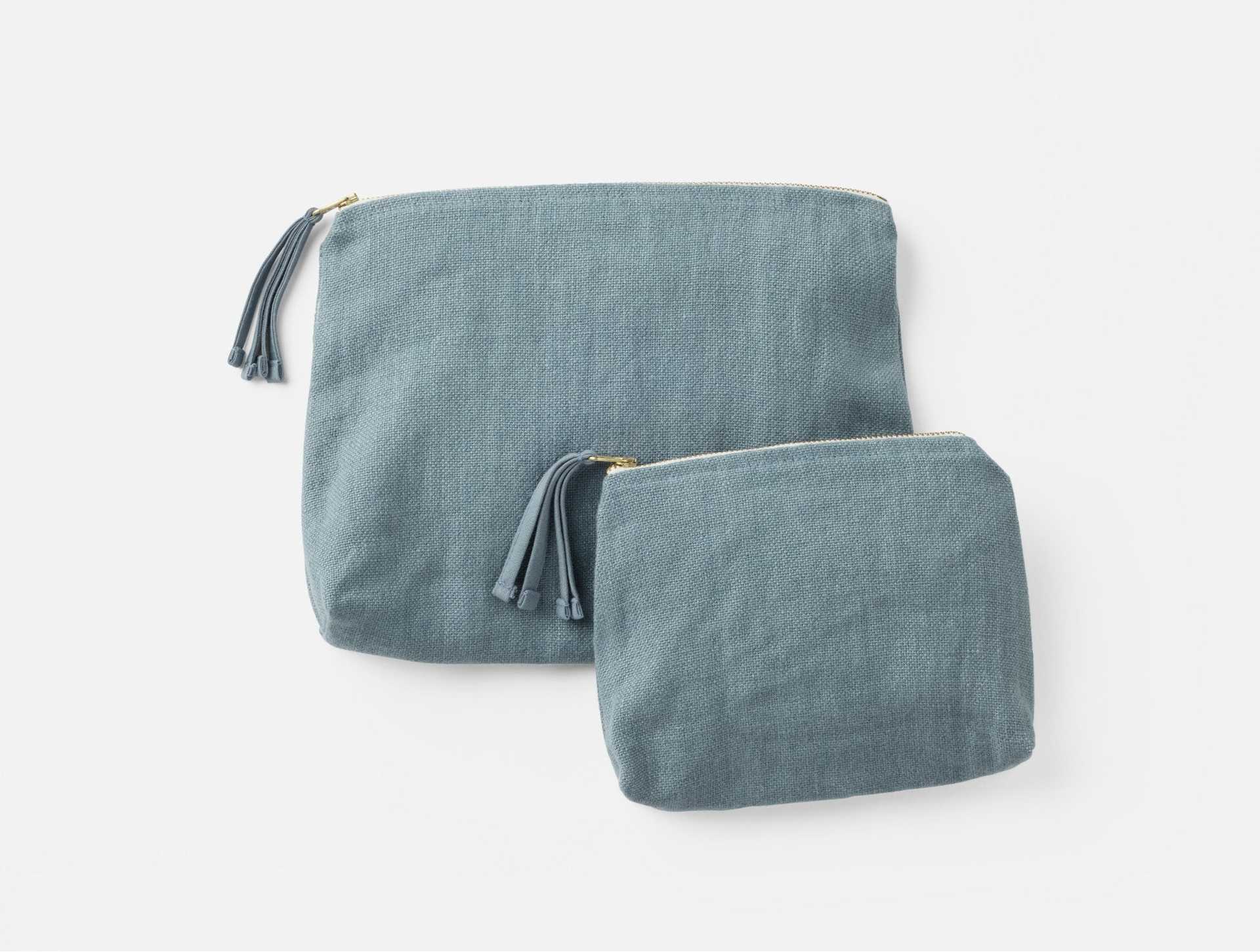
Care instructions for other travel organizers can look quite different. For instance, the Helena Organic Linen Pouch Set is made with an organic linen exterior and cotton interior, and its listed guidance says to machine wash cold on a gentle cycle and tumble dry low. That is a separate product made from different materials; its directions are not a template for silk. The useful lesson is simple: identify the fiber and construction first, then follow the matching instructions.
A practical step-by-step routine
For a silk laundry bag whose label permits a delicate machine wash and air drying, this measured routine can help make the process straightforward:
- Read the complete label. Confirm the permitted washing method, temperature limit, drying direction, and any ironing guidance.
- Empty and inspect the bag. Remove lint, small belongings, and anything tucked into seams or corners. Check closures and ties.
- Prepare a light load. Keep the bag away from heavy, abrasive, or fastened garments that could rub or snag it.
- Select the gentlest allowed wash. Use cool water or the stated maximum temperature, a delicate cycle, and an appropriate mild detergent.
- Remove it promptly. Do not leave the bag sitting wet in the washer. Support it as you take it out and avoid wringing.
- Air dry thoroughly. Smooth the fabric gently and let it dry naturally in a well-ventilated place, away from direct heat.
- Store only when completely dry. Fold it loosely or lay it flat in a clean, dry space until your next trip.
This is a general framework, not a replacement for product-specific directions. If a care label says hand wash, dry clean, or use a different method, follow that instruction instead. If the label is missing, avoid guessing with high heat or vigorous washing. Contacting the manufacturer for care guidance is safer than relying on a routine meant for a different item.
Between trips: keep the bag fresh with less effort
Good care starts before laundry day. After unpacking, take the bag out of the suitcase and let it air in a clean, dry place. Empty it fully, shake out loose lint, and leave it open until any lingering moisture has gone. If it has carried damp clothing, let it dry completely before folding or packing it away.
For travel, use the bag to separate worn garments from clean items, but avoid overfilling it. A tightly packed bag can put strain on seams and closures, while damp or heavily soiled clothing may need special handling. If clothes are wet, consider allowing them to dry before storing them with other belongings, when circumstances permit. The bag is an organizer, not a waterproof barrier, unless its maker specifically describes it as one.
Store the bag away from sharp objects, rough hardware, and direct sunlight. A clean drawer or a shelf inside a breathable fabric storage space is preferable to leaving it compressed beneath heavy luggage. These small habits reduce the chance of snags and help keep the bag in good condition without frequent washing.
Common mistakes to avoid
- Ignoring the temperature limit: “Machine washable” does not mean any water temperature is suitable. Observe the maximum stated on the care label.
- Using a regular or heavy-duty cycle: More agitation can mean more friction. Select a delicate setting only when the product permits machine washing.
- Tumbling to save time: If instructions say air dry, skip the dryer—even a short cycle can introduce unnecessary heat and movement.
- Wringing the fabric: Twisting a wet silk bag can strain fibers and seams. Press gently between towels if extra water needs to be removed.
- Mixing up products: A cotton or linen organizer’s instructions do not necessarily apply to silk, padding, or a lined bag.
- Packing it away damp: Let the entire bag dry, including linings and seams, before storage.
The takeaway for silk laundry bag care
A well-cared-for silk laundry bag can make travel laundry organization feel simple: worn clothes have a place, clean pieces stay separate, and unpacking becomes less chaotic. The care itself can be just as uncomplicated. Read the full label, respect any temperature limit, use a delicate cycle only when it is approved, avoid rough handling, and air dry when directed.
Most importantly, treat each product as its own case. A slim silk bag, a padded version, and a lined travel organizer may share a purpose without sharing the same construction or care routine. Check the instructions before washing, make time for thorough drying, and store the bag clean and dry between journeys. A few thoughtful steps help preserve the fabric—and keep this useful little travel companion ready to go.